
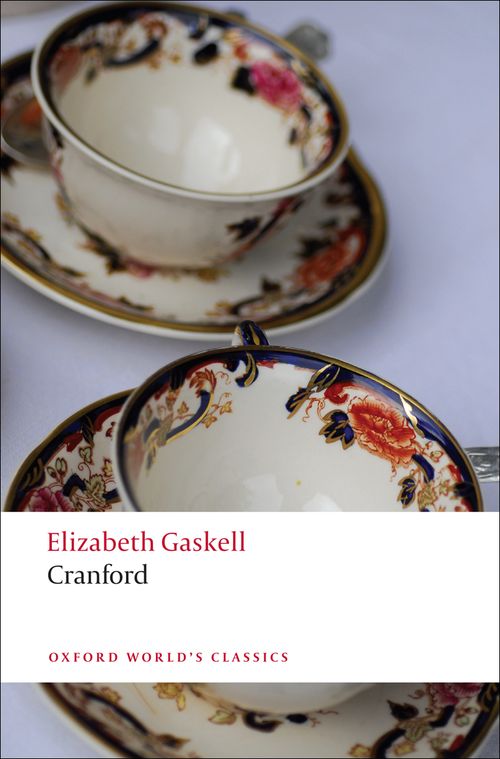
Cranford
Mary Smith follows the women of Cranford as they preserve elaborate visiting customs and a genteel appearance on limited means.
About
Spoiler notice: Plot spoilers, including Miss Matty’s financial crisis, Peter’s return and the ending.
Cranford is a town where a visit, a dress or an invitation can become a matter of public importance. Elizabeth Gaskell introduces its society through Mary Smith, whose account follows the women maintaining its elaborate standards of gentility. Money is often scarce, but discussing that scarcity too plainly is almost as embarrassing as displaying excessive wealth. The residents make economies while trying to preserve the appearance of comfort, and their rules give apparently small decisions considerable weight. Published in book form in 1853 after beginning as a serial, Cranford builds its world through linked episodes rather than a single continuous adventure. Mary’s observations allow the humour of this society to sit beside the anxieties that make its conventions feel necessary to the people living within them.
Captain Brown disturbs that careful arrangement by being openly poor. His frankness and connection with the railway bring an unfamiliar manner into the town, where certain subjects are ordinarily avoided or disguised. Yet practical kindness gives the residents reasons to value him beyond his disregard for their customs. His presence establishes a recurring tension between the rules by which people judge one another and the help they actually provide. Mary notices both, often describing a social performance with amusement before showing the vulnerability beneath it. The town’s women are capable of snobbery and exaggerated alarm, but they also have limited resources and strong attachments. Their desire to appear independent can make accepting assistance awkward even when the need for it is painfully clear.
Miss Matilda Jenkyns, usually called Miss Matty, gives that tension a particularly intimate setting. Her more forceful sister Deborah has shaped decisions and expectations in the household, leaving Matty accustomed to doubting her own judgement. Memories of Mr Holbrook bring another life into view, one connected with affection that never became marriage. These recollections make the women’s present circumstances feel like the continuation of histories Mary can only gradually uncover. Family stories also lead to Peter Jenkyns, Matty’s long-absent brother, whose departure remains part of the household’s emotional life. Cranford’s rooms contain more than furniture and carefully observed etiquette: conversations bring back lost relationships, old authority and possibilities that have become difficult even to discuss. Matty’s gentleness develops against that background of remembered people and enduring habits.
The failure of the Town and County Bank turns those quiet concerns into an immediate threat. Before the collapse is officially confirmed, Matty sees a farmer unable to spend a banknote that a shopkeeper fears will become worthless. She exchanges her own gold for his note, giving up the money intended for a new silk gown. Her explanation is simple: as a shareholder, she feels responsible when an honest person risks losing money through the bank. Mary worries about the decision, but Matty is unusually firm. The subsequent failure leaves her with only thirteen pounds a year. Her generosity has not protected her from disaster, and Gaskell allows the reader to see both the moral clarity of her action and the frightening practical position in which she now finds herself.
What follows is an account of assistance being worked out in the details of daily life. Martha refuses to abandon Matty and spends her own money on a comforting pudding, while Mary considers what work an older woman with Matty’s particular education could realistically undertake. Selling tea offers a possibility: it requires little physical strength and avoids some of the dirt and inconvenience Matty dislikes. Even so, entering trade raises questions about social standing. The other women quietly arrange contributions, hoping to help without hurting her independence. Martha and Jem’s proposed marriage becomes entangled with plans to provide Matty with a home. These conversations are often funny, especially when the participants struggle to say what they mean, but the underlying question is serious: how can a community support someone without making her feel diminished?
Peter’s return from India changes the household again. The long separation ends in recognition, and he eventually settles with his sister. By the final chapter, the shop has become a parlour once more, furniture has returned to its place and Matty’s circumstances have improved. Martha and Jem remain in the household with their baby, Matilda, giving Matty the domestic company she cherishes. Peter brings stories as well as material reassurance, although Mary treats some of his extraordinary accounts with considerable doubt. His experience abroad is therefore presented through a man who enjoys entertaining his listeners, rather than as an unquestioned record of every adventure. The restored household combines different generations and relationships, allowing Matty’s home to become more crowded and affectionate than its earlier conventions might have suggested.
The remaining trouble lies in Cranford’s divided social circle. Mrs Jamieson’s quarrel with the Hogginses continues to disturb Matty, and Peter sets about bringing the parties together. A gathering for the returning Gordons provides an opportunity, while a proposed performance by Signor Brunoni helps him interest Mrs Jamieson. Mary briefly suspects another explanation for Peter’s attentions, but no marriage between him and Mrs Jamieson follows. His successful manoeuvre is the renewal of conversation between people who have been keeping apart. The novel closes with friendly sociability restored and Matty’s kindness acknowledged as a shared attachment. Its resolution grows from the same small actions that have occupied the story throughout: visiting, making room, offering help and finding a way for an injured relationship to begin again.
Book details
- Author
- Elizabeth Gaskell
- First published
- 1853
- Series
- No series listed
- Subgenre
- Literary fiction, Modern classics
- Primary genre
- Literary Fiction
- Tags
- No tags for this book.
Review
Editor profile
Baby Bat
Goodreads and social links will be added soon.
- Goodreads — link coming soon
- Social media — link coming soon