
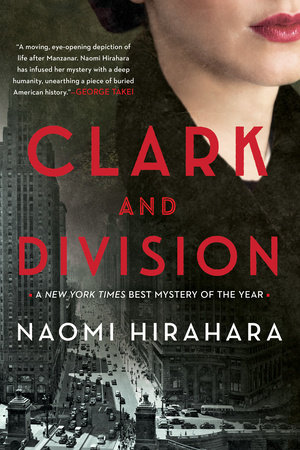
Clark and Division
In 1944, twenty-year-old Aki Ito and her parents arrive in Chicago after their release from Manzanar, where Japanese Americans were incarcerated during the war.
About
Spoiler notice: Discusses the opening setup, Rose’s death being ruled a suicide, Aki’s investigation, and the novel’s post-Manzanar Chicago setting; does not reveal investigative discoveries or the ending.
The story opens as twenty-year-old Aki Ito and her parents arrive in Chicago in 1944, released from Manzanar after the US government’s wartime incarceration of Japanese Americans. They have left their California home and business behind. Aki’s older sister Rose reached Chicago months earlier, part of a relocation programme that sent Nisei away from the West Coast. The family expects to reunite with her, but Rose has died beneath a train at the Clark and Division station. Officials call it suicide. Aki, who remembers a polished and optimistic sister, cannot accept that explanation without asking questions.
Aki’s search begins inside a family whose members have experienced the same upheaval differently. Rose went ahead and built a life among young Japanese Americans in Chicago; Aki and her parents are newly arrived, grieving, and trying to find work and a place to live. Their old routines and social standing have been stripped away, while the city offers unfamiliar freedoms and new forms of prejudice. The novel uses the distance between the sisters to give its mystery an emotional centre: Aki is investigating a death, but she is also trying to understand the person she believed she knew and the sister whose choices she did not witness.
The investigation moves through Rose’s neighbourhood and the people who knew her. Aki works from fragments, including Rose’s journal, and questions friends and acquaintances who may be protective, reluctant, or unsure what to tell the younger sister. The official conclusion gives her a starting point, not closure. As she tries to reconstruct Rose’s final days, everyday details of work, lodging, transport and community become clues to how life was organised for the relocated Nisei. The search also unsettles the family’s instinct to keep private matters private, especially when public grief and private knowledge meet.
Clark and Division is a historical mystery built around that inquiry, but its setting is central to how the inquiry unfolds. Hirahara places Aki in a Japanese American community taking shape in wartime Chicago, after the forced removal of families from the West Coast and their release from camps such as Manzanar. Chicago is not simply a destination where the plot changes scenery. It is a city the characters must learn: its streets, institutions, workplaces and social expectations influence who can help Aki and what kinds of lives the young people around Rose can make. The book looks at resettlement as an ongoing adjustment, not a clean transition from camp to freedom.
Aki’s perspective also makes the mystery a story of growing into adulthood and out of another person’s shadow. She admired Rose, so learning about her through other people means revising an idealised image as well as piecing together events. Her questions bring her into contact with people beyond the family, and she must decide how directly to press them when answers may expose painful or intimate parts of Rose’s life. The sister relationship therefore operates on two levels: Rose is the missing person at the centre of the case, and her absence changes the way Aki sees herself and her parents.
The format keeps the case personal rather than making Aki a professional detective. She has no institutional authority that can force people to answer, and her closeness to Rose can both motivate and complicate her questions. A journal can preserve a sister’s words, but it cannot by itself explain what she left unsaid; recollections from acquaintances add perspectives while also reflecting their own loyalties. This gives the investigation a social shape. Aki must learn how to approach people in a community where family reputation, discretion and mutual support matter, and where everyone is adjusting to a changed city. The available evidence is partial, so the reader follows a process of listening and comparison rather than a neat sequence of official clues.
The book’s historical texture comes from Hirahara’s documented research into Japanese American history. The author has described decades of archival work behind the novel; contemporary coverage points to the care given to neighbourhood locations and ordinary material details. Those particulars allow the reader to see resettlement through lived spaces rather than through a broad historical summary alone. They also give the title a double role: Clark and Division names a real intersection and station associated with Rose’s world, while signalling a neighbourhood and community whose history has often received less attention than the wartime incarceration itself.
That process places the book between crime fiction and historical fiction. The central question about Rose’s death supplies suspense, while the setting asks readers to notice the systems and attitudes surrounding the characters. Their post-Manzanar lives are shaped by state policy, racial hostility and the need to establish themselves in a place far from home. The novel’s focus on Aki’s family gives those forces a close scale: employment, housing, friendship and the boundaries of what can be discussed are part of the world she must navigate. Its historical subject is carried through people’s relationships and daily circumstances, with the mystery providing a route into a community as well as a reason to keep searching. Aki’s investigation asks what can be known about someone who is no longer there to explain herself, while the Chicago setting shows how political decisions continue to shape the choices available to people after their release.
Book details
- Author
- Naomi Hirahara
- First published
- 2021
- Series
- A Japantown Mystery, book 1
- Subgenre
- Historical mystery, Detective fiction
- Primary genre
- Mystery & Thriller, Historical Fiction
- Tags
- No tags for this book.
- Reading order
- This is the only A Japantown Mystery title on the shelf right now.
Review
Editor profile
Baby Bat
Goodreads and social links will be added soon.
- Goodreads — link coming soon
- Social media — link coming soon