
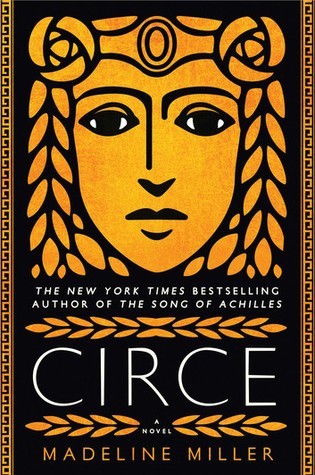
Circe
Circe is a daughter of Helios, the sun titan, and by the standards of the gods she is nothing much: no particular power, a voice that sounds like a mortal's, and no interest in divine politics.
About
Spoiler notice: Full-novel spoilers, including Circe’s transformation of Scylla, Odysseus’s death, and the potion she drinks at the end.
Madeline Miller’s novel follows the immortal Circe from childhood in the palace of her father, the Titan sun god Helios, through a life that reaches beyond the familiar episode in Homer’s Odyssey. Circe is a goddess by birth, but her family treats her as an awkward, unimpressive daughter, and she grows up watching power being maintained through cruelty and display. After seeing Prometheus punished for helping mortals, she brings him nectar and hears that the gods need not all behave alike. The book opens in a world of divine courts, old rivalries and mortal lives treated as expendable, then stays close to Circe as she learns what sort of power she can claim within it.
Her first experiments with witchcraft come from affection and a wish to change the limits around her. Circe helps the fisherman Glaucos become a god, believing he will remain the person she loves; after he chooses the beautiful nymph Scylla instead, Circe uses the same magic against her rival. She intends to make Scylla ugly, but the spell transforms her into the many-headed sea monster known from myth. Circe admits what she has done, and Zeus’s answer is exile to the remote island of Aiaia. The mistake follows her across the centuries: Scylla continues to threaten sailors, while Circe has to live with both the consequences of her jealousy and the knowledge that her craft can change lives beyond her control.
Aiaia becomes home as Circe gathers herbs, practises spells and learns to meet visitors on her own terms. Hermes brings news from the divine world, while a voyage to Crete brings Circe to her sister Pasiphaë, the inventor Daedalus and the birth of the Minotaur. Circe helps deliver the child and sees how the royal household intends to contain the creature. On the journey to Crete she faces Scylla in the strait; she cannot undo the transformation, but she buys the ship time to pass. These encounters connect her private history to the myths of Ariadne, Jason and Medea, letting famous figures arrive as people whose choices affect Circe rather than as distant names in an established legend.
The island’s hospitality changes after a crew of sailors arrives. Circe first welcomes them, then recognizes that their questions about her isolation are a threat; after the captain assaults her, she turns the men into pigs and kills them. Later arrivals meet a guarded host who uses her magic before they can harm her. Odysseus is different in the way he speaks of his wife Penelope and in his caution around Circe’s wine, and the two become lovers during his long stop on Aiaia. The novel does not treat this meeting as a brief detour in a hero’s journey: Odysseus’s stay becomes part of Circe’s life, and his departure is followed by the birth of their son, Telegonus, whom she raises on the island.
Athena tries to claim Telegonus while he is a baby, forcing Circe to confront a threat her strength cannot simply remove. As he grows, her protection begins to feel like another boundary. Eventually she equips him for Ithaca with a spear tipped by Trygon’s poisonous tail. When Odysseus attacks the stranger on his beach, Telegonus accidentally wounds him and the poison kills him. He returns to Aiaia with Penelope and Telemachus. Odysseus’s death brings his two families together, but it also exposes how little Circe knew about the fearful, violent man he had become at home. Penelope seeks refuge where Athena cannot dictate her son’s future, and Circe must decide whether to trust these unexpected guests.
Penelope learns herbcraft from Circe while Telemachus repairs the house, finding purpose in work rather than his father’s pursuit of fame. When Athena offers him a city to found, he refuses; Telegonus accepts instead and leaves with Circe’s blessing. Losing his daily company makes her confront the cost of outliving everyone she loves. She forces Helios to seek her release from exile by threatening to expose divine secrets, then sails with Telemachus. Facing Scylla again, she turns the monster to stone, ending a danger of her own making. Back on Aiaia, Penelope can take up the island’s witchcraft while Circe prepares to choose another life.
Told in Circe’s first-person voice across centuries, the book links episodes from Greek myth through what she witnesses, remembers and later understands. Its scale is long, but the narrative keeps returning to concrete acts of craft: gathering plants, weaving, building and making choices whose effects last. Circe’s account can also revise the reputations of people known from other stories, because the events are filtered through a participant who has her own history with them. At the end she prepares a potion from the flowers connected with her earliest spell and drinks it while imagining a mortal life with Telemachus. The scene presents her decision and hoped-for future; it stops before confirming what the potion does or showing that future achieved.
Book details
- Author
- Madeline Miller
- First published
- 2018
- Series
- No series listed
- Subgenre
- Myth retelling
- Primary genre
- Fantasy
- Tags
- No tags for this book.
Review
Editor profile
Baby Bat
Goodreads and social links will be added soon.
- Goodreads — link coming soon
- Social media — link coming soon