
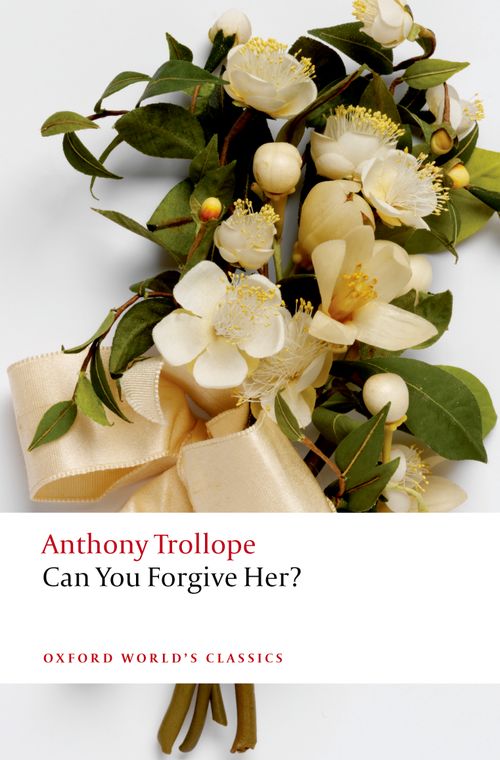
Can You Forgive Her?
Alice Vavasor questions the secure future offered by John Grey as her attachment to ambitious cousin George draws her towards another choice.
About
Spoiler notice: Full-plot spoilers, including Alice’s eventual marriage, George’s departure and the Palliser family’s ending.
Alice Vavasor is already engaged when Can You Forgive Her? begins, but that fact gives her life less certainty than it appears to promise. She lives in London with her father, contributes towards their household expenses and has enough independence to resist some of her relations’ expectations. Their shared house is nevertheless a place where father and daughter lead largely separate lives. Anthony Trollope places her decisions inside that combination of freedom, loneliness and family scrutiny. The novel appeared in monthly instalments in 1864–65, with its first two-volume book edition completed in 1865, and begins the Palliser sequence. Its title turns a question about Alice into a question for the reader: how should a woman’s mistakes be judged when choosing a husband also means choosing the shape and purpose of her future?
John Grey offers Alice a respected and secure marriage, while her cousin George Vavasor draws her towards a more uncertain life connected with political ambition. George’s sister Kate favours the match within their own family and encourages its renewal. Alice’s difficulty goes beyond deciding which man possesses the better character. She is attracted to the possibility of taking an interest in a public career, and the prospect of a quiet, correct existence does not settle her doubts. Her choices are made in conversation with people who have strong ideas about what should satisfy her. Some offer affection, others reproach, and several combine the two. Trollope lets those pressures accumulate around a woman who must still be responsible for an answer that nobody else can make on her behalf.
When Alice accepts George again, she asks him to wait a year before their marriage and offers financial help for his immediate political purposes. She understands that the arrangement carries risk and says so to Kate, who is alarmed by the prospect of her brother using Alice’s money before the wedding. The exchange gives an unusually concrete form to Alice’s hopes: she wants to see George in Parliament, and her fortune can help make the attempt possible. Money, affection and a desired role in the world become inseparable. Her grandfather’s reaction is much less romantic. He questions George’s reliability, remembers his conduct over the family property and fears what he will do with Alice’s resources. Alice’s willingness to commit herself does not remove the reasons other people have for doubting the man she has chosen.
Lady Glencora Palliser’s marriage provides another version of the conflict between personal feeling and an approved future. Married to Plantagenet Palliser, she remains drawn towards Burgo Fitzgerald and struggles with the life that wealth and family expectations have arranged around her. Plantagenet’s political seriousness does not automatically supply the companionship or excitement she wants. Her friendship with Alice makes room for conversations in which married respectability looks considerably less simple than it does from outside. The women occupy different positions, but each must consider what is owed to feeling, to a promise and to the people who regard their futures as a family concern. Glencora’s marriage also brings succession into the story, turning the intimate question of having a child into a matter watched anxiously by a powerful aristocratic household.
George’s ambition becomes increasingly difficult to separate from his need for money and his anger over the Vavasor estate. The property dispute brings Kate into conflict with him, despite her earlier efforts to support his marriage to Alice. His later violent attempt against Grey takes the rivalry beyond arguments and injured pride. The resolution does not give George a triumphant political or domestic future: he leaves England for America, and Grey declines to pursue the prosecution urged by the police. Alice’s eventual return to Grey therefore follows the failure of the alternative she had tried to choose. Yet the novel continues to concern itself with how she can live after that failure, rather than treating a mistaken decision as sufficient reason to deny her any future happiness.
Alice and Grey marry at Matching Priory, with Lady Glencora taking an energetic interest in the arrangements and wedding gifts. The celebration is more magnificent than Alice would have wished, and Glencora’s attention to the quality of the jewels gives the preparations some lively social comedy. After the wedding, the Greys travel through Italy, their plans affected by the timing of political opportunities at home. Grey discusses entering Parliament with Alice, who listens readily and takes pleasure in the prospect. This development matters to the earlier question of what marriage will offer her. The man associated with the safer choice becomes involved in public life, while Alice finds herself able to share that interest. Their relationship settles into an arrangement more responsive to her hopes than a simple division between excitement and security would suggest.
The final chapter gathers the domestic and political outcomes at Gatherum Castle. Glencora has given birth to a son and speaks frankly to Alice about the pressure she felt to produce a male heir. Her relief belongs to a world in which the child’s future rank and wealth have been anticipated before he can understand either. Grey returns from Silverbridge elected to Parliament, while Palliser has become Chancellor of the Exchequer and looks towards his own parliamentary work. Alice welcomes her husband’s success but worries that her wishes may have driven him into it. His affectionate answer allows the narrator to return to the question posed by the title. Having described the forgiveness of those around her, he asks the reader for the same generosity, closing Alice’s story with happiness that she herself can hardly believe she has deserved.
Book details
- Author
- Anthony Trollope
- First published
- 1865
- Series
- No series listed
- Subgenre
- Literary fiction, Modern classics
- Primary genre
- Literary Fiction
- Tags
- No tags for this book.
Review
Editor profile
Baby Bat
Goodreads and social links will be added soon.
- Goodreads — link coming soon
- Social media — link coming soon