
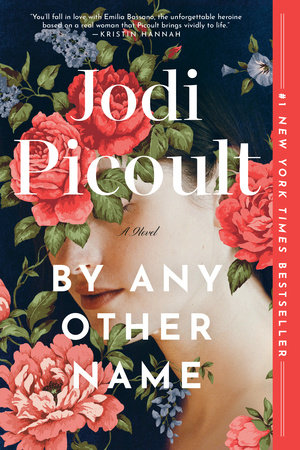
By Any Other Name
Told across two timelines, By Any Other Name follows contemporary playwright Melina Green and her Elizabethan ancestor Emilia Bassano.
About
Spoiler notice: Spoilers cover the two timelines, Emilia Bassano’s fictional authorship arrangement, and Melina Green’s play submission. The later outcomes and ending are not disclosed.
By Any Other Name follows two playwrights separated by four centuries, each trying to get her words before an audience in a world that gives men more credit. In the contemporary strand, Melina Green has written a play inspired by her Elizabethan ancestor, Emilia Bassano. She wants the work staged, but her best friend submits it to a festival under a male pseudonym before she has decided whether to take that risk herself. The move puts a practical question at the center of Melina’s story: if the work is performed under someone else’s name, has she gained a hearing or surrendered the thing she wanted most? Her uncertainty links the modern theater to Emilia’s much earlier struggle to write.
Emilia’s chapters begin in 1581, when she is a ward of English aristocrats. Her education includes languages, history and writing, and she develops a gift for telling stories. Yet the social world around her offers little room for a woman to speak publicly in her own name. Her connection to the Lord Chamberlain, who oversees theatrical productions, gives her access to the playhouses and lets her see how a playwright’s words affect an audience. Picoult builds the historical strand around a real woman while imagining a path for her into the theatre: Emilia decides to find a way to put a play onstage, even if doing so means paying an actor named William Shakespeare to stand behind it.
That authorship arrangement is the novel’s fictional proposition, and the distinction matters. The story asks readers to imagine Emilia as the hidden writer behind Shakespeare’s plays; it does not establish that claim as historical fact. The Folger Shakespeare Library describes a substantial documentary record linking Shakespeare to the works attributed to him, while also recognizing that playwrights of his period collaborated and that scholars debate attribution in particular cases. Picoult’s novel takes the larger authorship question and uses it as a dramatic premise. Emilia’s imagined bargain lets the book explore how a woman’s work might disappear when the name attached to it belongs to a man, without turning the story into proof about the historical Shakespeare.
Melina’s present-day problem echoes that premise without simply repeating it. She has a finished play and a friend willing to use his name to help it reach a festival, but that offer creates new complications around credit and control. Her chapters show the work behind a writing life: study, earlier attempts, mentors, jobs and the connections that shape who gets an opportunity. The official excerpt introduces Melina as a former Bard College playwriting student who has kept writing after graduation and understands that theater depends on relationships as well as talent. Those details ground the present strand in the ordinary labor of making plays, then place that labor beside the gendered barrier Melina sees when she tries to get her work produced.
Emilia faces a different set of constraints. Her access to court and theatre comes through her position in a household controlled by powerful men, and the same institutions that bring her near the stage restrict what she can do there. The novel follows her attempt to turn observation into authorship: she watches plays move audiences, develops her own plan, and weighs what it will cost to let another person’s name carry her writing. This thread is historical fiction built around a documented person and an imagined authorship story. The tension comes from the space between the life the record can preserve and the private work Picoult invents for Emilia, as the character tries to leave a mark in a system that may erase her contribution.
The parallel timelines give the book its central comparison. Melina and Emilia do not face identical circumstances, and the novel leaves room for the differences between Elizabethan England and a contemporary theater scene. What joins them is the problem of recognition: whose name appears on the work, who has the power to decide, and what a writer may have to trade for the chance to be heard. A play moves through several hands before an audience sees it, which makes authorship a question of both creation and public credit. The Folger’s discussion of early modern theatre provides a useful historical context here: collaboration was common in the period, even as the specific authorship claims around individual plays require careful evidence.
Picoult structures By Any Other Name as a conversation across those timelines rather than a single account of Shakespeare’s career. Melina’s play about Emilia sends her toward a family story, while Emilia’s chapters reimagine what may lie behind a name printed on a script. The two strands keep returning to the same decision from different angles: whether work can survive the loss of its creator’s credit, and whether an audience can recognize a voice when it is presented under another name. The novel’s focus stays with the women trying to make art under those conditions. Its historical claim belongs to the fiction; its human conflict concerns the choices both playwrights must face when recognition comes with a cost.
Book details
- Author
- Jodi Picoult
- First published
- 2024
- Series
- No series listed
- Subgenre
- Historical fiction, Literary fiction, Biographical fiction
- Primary genre
- Literary Fiction, Historical Fiction
- Tags
- No tags for this book.
Review
Editor profile
Baby Bat
Goodreads and social links will be added soon.
- Goodreads — link coming soon
- Social media — link coming soon