
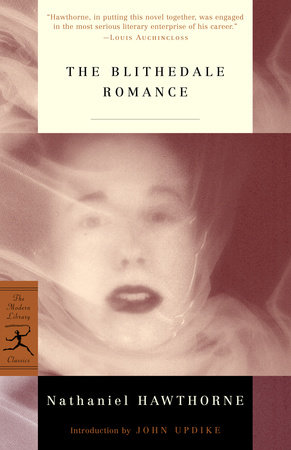
The Blithedale Romance
Poet Miles Coverdale joins an experimental New England farming community, where the hope of a generous shared life meets the competing desires of its members.
About
Spoiler notice: Full-plot spoilers, including Priscilla’s identity as the Veiled Lady, the sisters’ relationship, Zenobia’s death and Coverdale’s final confession.
Miles Coverdale looks back on Blithedale from a life in which its hopes have long since faded. He is a poet who joined an experimental farming community, hoping that shared work and a different social arrangement might offer something better than comfortable town life. His arrival in an April snowstorm immediately gives that ambition an awkward physical reality: the newcomers speak warmly of regeneration while shivering their way towards the farmhouse. Inside, a substantial fire and the Fosters' welcome make their proposed new world feel possible. Silas Foster will manage the farm and teach them its work, but enthusiasm alone cannot remove differences of experience or purpose. Coverdale's retrospective voice lets the reader hear affection, embarrassment and disillusionment together. The promise of a fresh beginning arrives already shadowed by his knowledge of what happened afterwards.
The community soon concentrates his attention on three people. Zenobia is a commanding woman whose chosen literary name suits the regal presence he attributes to her. She welcomes him as a fellow writer, and her beauty, confidence and apparent wealth make her an important figure in the enterprise. Hollingsworth, a physically powerful man committed to reforming criminals, brings an intensity that Coverdale both admires and struggles against. Priscilla enters the household timidly, looking to Zenobia for protection and receiving less warmth than she needs. Her arrival introduces connections that Coverdale does not yet understand. The contrast between these women is vivid, but it is also filtered through his habits of description: he repeatedly turns their appearance into a story about their character. Their private histories remain more complicated than the impressions he can collect at the farmhouse.
Shared life proves vulnerable to purposes that cannot comfortably be shared. Hollingsworth's philanthropic scheme matters to him more than the general experiment, and his need for support places pressure on friendship as well as money. Coverdale, meanwhile, preserves a private retreat high in a pine tree, enclosed by grapevines. He calls this hidden room his exclusive possession and a symbol of his individuality, a revealing qualification to his communal commitment. From its openings he can watch people working below: men digging peat near the river, Hollingsworth moving stones with oxen, Priscilla at a farmhouse window. The scene makes his position concrete. He belongs to the undertaking while also standing apart from it, observing and interpreting other people rather than always entering their difficulties. His apparently detached curiosity will become one of the book's central uncertainties.
The mystery extends beyond the farm into the world of public exhibitions. Before joining Blithedale, Coverdale has seen the Veiled Lady, a performer presented through claims of extraordinary powers. Later, Zenobia tells a theatrical story about a veiled woman and casts gauze over Priscilla, who reacts with distress. Professor Westervelt also appears, asking questions about both women and hinting at knowledge Coverdale lacks. The narrator finds him polished, intrusive and repellent, but those impressions do not settle the nature of his connections. Hawthorne gives the reader recurring images of concealment, performance and control: a public name, a hidden face, a private observer and people whose explanations never quite meet. The romance's suspense comes from those social uncertainties as much as from the possibility of something supernatural beneath the spectacle.
After leaving the farm for a time, Coverdale encounters Hollingsworth in a village hall where another Veiled Lady exhibition is about to begin. He recognizes Westervelt as the presenter and begins to connect the performance with Priscilla's absence. Westervelt promises an extraordinary command over the veiled figure's senses and will, insisting that she cannot rise without his permission. Hollingsworth steps forward and calls her to safety. She removes the veil and runs to him, turning what was offered as a demonstration of control into a public escape. The revelation gives Priscilla's earlier vulnerability a more specific history, while leaving questions about how others allowed her to reach that situation. Coverdale's presence again supplies a witness to the crisis, although witnessing its outcome does not mean he knows every choice that preceded it.
When he returns to Blithedale, Coverdale finds Hollingsworth, Zenobia and Priscilla at the end of a confrontation whose earlier exchanges he has missed. Zenobia challenges Hollingsworth about her presumed wealth, the support she intended for his project and his feelings for Priscilla. He acknowledges that he loves the younger woman. Zenobia answers with an accusation that his apparently generous cause has absorbed everything into his own purpose, using people while their usefulness lasts. Priscilla appeals to her as a sister, and their shared father becomes part of what is openly acknowledged. Coverdale can report the words spoken in his presence, but repeatedly admits that he must conjecture about the rest. The emotional rupture is clear; the complete distribution of knowledge, intention and responsibility among the characters is harder to recover from his account.
Zenobia disappears, and her body is recovered from the river in a night search. Coverdale presents her death as suicide without claiming to have witnessed the act. The burial brings the community's ideals into painful contact with a practical necessity for which it has made no settled provision. He leaves within a week and never lives at Blithedale again. Much later, he finds Hollingsworth diminished and dependent on Priscilla's care; the great reformatory has not been built, and his guilt has replaced the confidence of his earlier mission. Coverdale's own comfortable bachelorhood offers little sense of fulfilment either. Only at the close does he disclose that he himself loved Priscilla. That admission changes the light on his curiosity and supposed distance from the others, leaving the reader to reconsider a narrative whose observer has withheld his most personal interest until its final sentence.
Book details
- Author
- Nathaniel Hawthorne
- First published
- 1852
- Series
- No series listed
- Subgenre
- Literary fiction, Modern classics
- Primary genre
- Literary Fiction
- Tags
- No tags for this book.
Review
Editor profile
Baby Bat
Goodreads and social links will be added soon.
- Goodreads — link coming soon
- Social media — link coming soon