
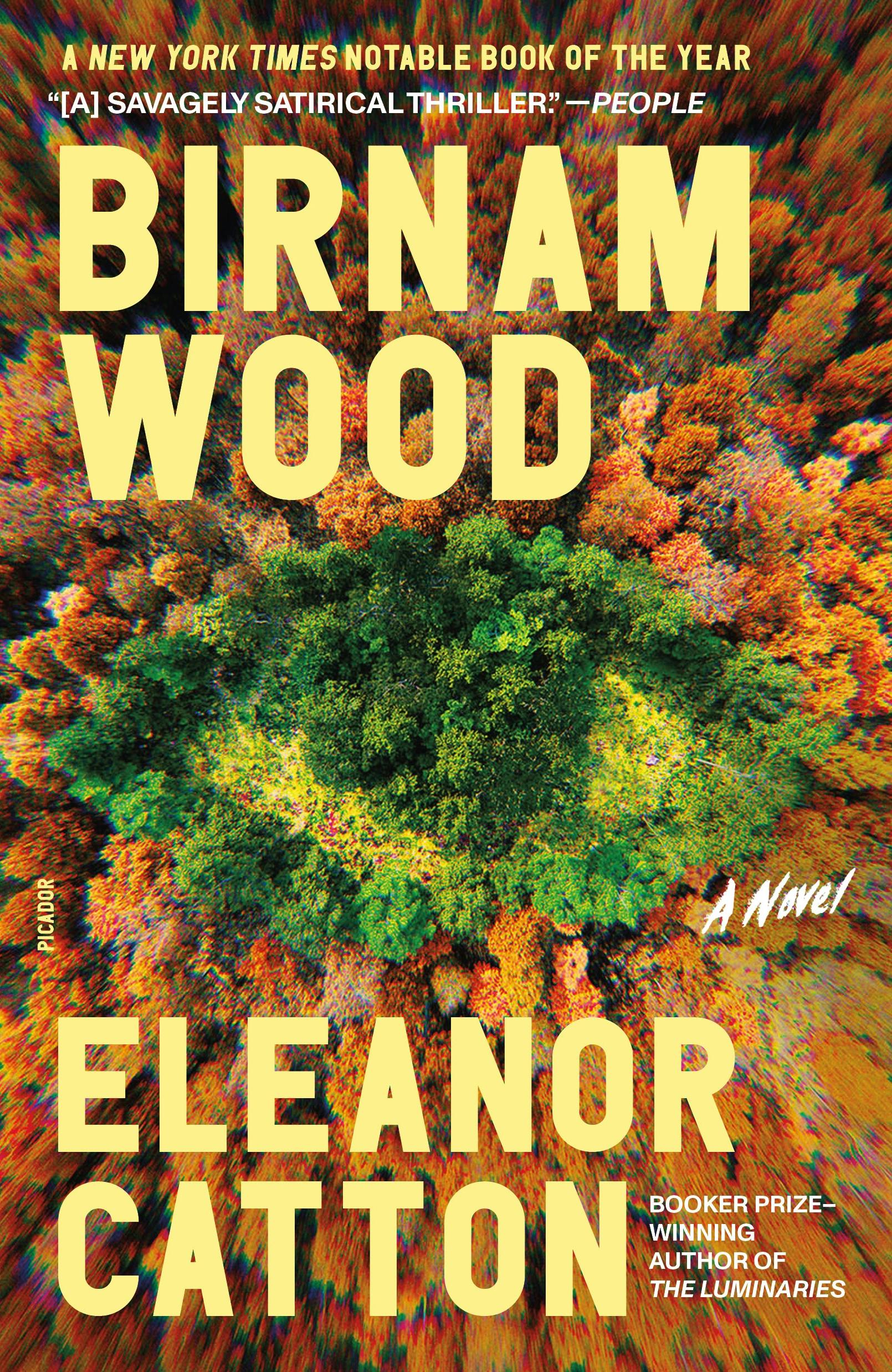
Birnam Wood
After a landslide closes Korowai Pass on New Zealand’s South Island, a farm outside isolated Thorndike catches the eye of Birnam Wood, a struggling guerrilla gardening collective.
About
Spoiler notice: This About covers the landslide, the Thorndike farm, and the collective’s initial opportunity and internal pressures. It withholds later reversals and the ending.
After earthquakes trigger a landslide across Korowai Pass, Thorndike is cut off on New Zealand’s South Island and a farm is left unused. Mira Bunting, founder of the guerrilla gardening collective Birnam Wood, sees a chance to grow food there and help the group that has struggled to break even. The land belongs to Sir Owen and Lady Jill Darvish; American billionaire Robert Lemoine wants to buy it. He tells Mira he plans to build a bunker for a coming disaster and offers a possible partnership. The two sides are politically opposed, yet both have something to gain from the arrangement. The farm therefore becomes the point where a practical need—to keep a precarious collective going—meets the question of how much trust or compromise that need can demand.
Inside the collective, the proposed deal enters relationships that are already under strain. Shelley Noakes has grown tired of being Mira’s reliable deputy and wants to leave both the organization and that supporting role. Tony Gallo challenges Mira over the possibility of working with Lemoine, turning the offer into an argument about whether refusing compromise protects an ideal or prevents anything useful from happening. Mira also controls how much of the offer she tells the others, so the group’s decision depends on information she chooses to share. Beyond the gardeners, Jill Darvish takes pride in her marriage to Owen while feeling a growing distance between them. The land deal consequently involves more than two neatly opposed camps. Ambition, loyalty and status divide households and friendships, and people who appear to be on the same side can want very different things from the next step.
Birnam Wood is a group of young activists who plant edible gardens on neglected land around the South Island. Some plots come through deals with owners, with the group receiving part of the harvest; others depend on trespass. Neither method has solved the question of growth. The collective has reached a point where members disagree about whether joining the conventional economy would help it last or betray what it means. That problem gives the farm more weight than a new place to grow crops. It could make the group steadier and more visible, while making compromise unavoidable. The politics take shape in organizational debate as much as in the landscape: members must decide what they can accept from a wealthy landholder, then live with the fact that they do not agree on the terms.
The title points to Macbeth’s moving wood, and the novel treats prophecy as a belief that can push people toward the future they fear. Sections move among characters, shifting what readers know about their motives. That structure suits a story in which people act on ambitions and expectations, then discover how those choices narrow what can happen next. Its design turns certainty into suspense.
The pressure between activism and survival has a generational frame. Younger organizers do not inherit the same chances to study, find affordable housing or settle into secure lives as their parents. Mira’s wish to make Birnam Wood stable is tangled with a billionaire’s offer, and Lemoine’s charm makes the prospect of an alliance more tempting than a simple villain-versus-activists setup. The bargain can feel like a route out of precarious organizing while also drawing the collective toward a person whose aims do not match theirs. Property matters here as both a concrete resource and a measure of who has the power to turn plans into reality. The group’s needs are immediate; Lemoine’s security depends on a scale of wealth and control they cannot match.
That mismatched bargain extends into the novel’s satire. No character offers an easy moral refuge, and political certainty does not shield the group from scrutiny. Lemoine tracks people with drones, hacks phones and conceals his intentions. The digital tools help him gather power, while failures to speak directly feed confusion. The contrast between online mediation and the physical New Zealand setting keeps the story grounded: messages and feeds can place characters inside managed bubbles, while the farm and park force them back into shared space. The land is not simply scenery for their arguments; it is the object of those arguments and the place where their choices have consequences.
Different ambitions pull the plot forward: Mira wants a greener, fairer future, Lemoine protects his own security and wealth, and Tony imagines a story that could make him famous. The reader may first see an easy division between one wrongdoer and everyone else, then complicity creeps across that line. Mira and Shelley’s friendship adds another scale of conflict: the two women have a strong rapport, but affection does not prevent betrayal. The political argument stays close to personal choices—who is trusted, whose self-description is accepted, and when an ideal becomes cover for private desire. Suspense grows from motives that overlap, not from a single question of whether one side is simply right.
Book details
- Author
- Eleanor Catton
- First published
- 2023
- Series
- No series listed
- Subgenre
- Literary fiction, Psychological thriller, Climate fiction
- Primary genre
- Literary Fiction, Mystery & Thriller
- Tags
- No tags for this book.
Review
Editor profile
Baby Bat
Goodreads and social links will be added soon.
- Goodreads — link coming soon
- Social media — link coming soon