
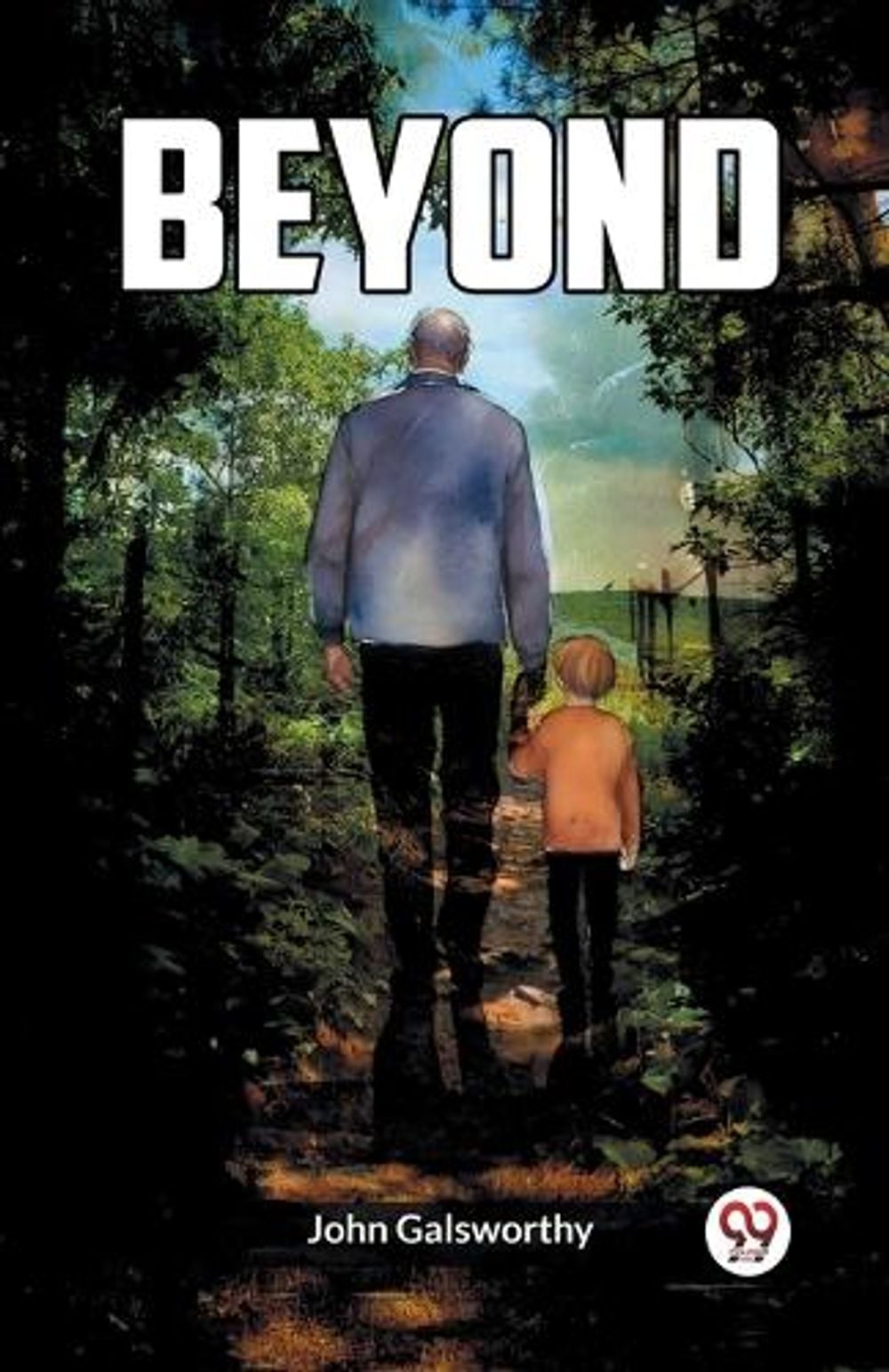
Beyond
Gyp Winton marries the violinist Gustav Fiorsen despite her father’s misgivings, drawn by his music and the force of his attraction to her.
About
Spoiler notice: This overview discusses the breakdown of Gyp's marriage, her relationship with Bryan Summerhay, his fatal riding accident and her life after the loss.
Beyond begins after a quiet registry-office wedding, with Major Charles Clare Winton watching his daughter leave beside a husband he distrusts. Ghita, known as Gyp, has married the violinist Gustav Fiorsen. For Winton, her departure recalls a much earlier loss: the woman he loved died giving birth to their daughter, leaving him with a grief that his restrained bearing has never abolished. John Galsworthy uses that memory to establish the depth and difficulty of his attachment to Gyp. He wants to protect her, but cannot choose her life without contradicting the love through which he hopes to protect it. The novel then moves back through the attraction that brought her to this marriage, making the father's apprehension a frame around choices the reader must understand for themselves.
Gyp meets Fiorsen at Wiesbaden, where his music and his response to her create a compelling sense of influence. She feels that a man capable of exercising power over others has become dependent on her approval. The thought is intoxicating, yet distrust accompanies it. Fiorsen's claims that he could improve coexist with an inability to accept the distance she asks him to maintain. Their courtship makes possession and dependence part of attraction before either has established a shared domestic life. Winton voices his doubts while refusing to forbid the marriage. His warning gives Gyp something to consider rather than an obstacle that can simply be removed. She proceeds without the novel suggesting that everyone who recognizes a danger can therefore avoid being drawn towards it.
Marriage turns the excitement of being wanted into daily responsibility. A home of her own also means managing a household and living with the permanence of a decision that once seemed to express her freedom. Fiorsen's attention to the dancer Daphne Wing deepens her unease. When Gyp confronts him, he attempts to separate bodily conduct from fidelity of feeling, insisting that his attachment to his wife remains unchanged. Her objection includes the suffering inflicted upon Daphne, whom he is prepared to dismiss as an experience that should do no lasting harm. The conversation reveals more than disagreement about marital loyalty. His account makes other people's hurt secondary to the desires he wishes to excuse, while Gyp cannot comfortably accept that division.
The decisive departure comes through fear for their child. Gyp discovers marks on the baby's arms and, later, must resist Fiorsen when he drunkenly forces his way into her room and reaches towards the child. She escapes with her daughter and returns to Winton at Mildenham. Galsworthy makes the baby's immediate safety central to the scene, rather than using another romantic disappointment as its sole explanation. Motherhood has created a claim that she can act upon even amid uncertainty about her own feelings. Her father's home offers refuge and familiarity, but returning does not restore the earlier version of her life. She now has experience of marriage, responsibility for another person and reasons to distrust assurances that affection will prevent harm.
Bryan Summerhay enters this changed life through a meeting on a train. They already know one another from hunting, and the conversation begins within that modest familiarity before developing into a passionate attachment. Gyp tells Winton that she now understands the intensity of the love he once felt for her mother. His recognition does not make the practical position straightforward. She cannot simply present her relationship with Bryan as a second legal marriage while Fiorsen remains her husband. When the couple establishes a home at the Red House, Winton supports them in his own terms, calling it her real marriage as an expression of acceptance. Gyp's wish to hold the lease and pay for the house also gives her a form of independence within their shared life.
That life eventually confronts a difference neither strength of feeling nor domestic happiness has removed. Bryan is attracted to his cousin Diana, and Gyp discovers the intimacy he has concealed. He insists that one kiss does not alter the fact that he loves Gyp. She cannot reconcile that claim with the undivided attachment she feels towards him. The narrative enters the distress of both, allowing Bryan's assurances to be sincere without making them sufficient. Their argument reaches beyond the extent of a particular encounter into incompatible expectations of love. His freedom to marry someone else adds another vulnerability to a relationship lacking legal recognition. Gyp's pride offers protection of a kind, but it cannot prevent her happiness from depending upon what another person wants.
Bryan's death in a riding accident ends the possibility of resolving those tensions together. Winton finds Gyp beside the river in a state of desperate grief and brings her back, then watches through the fever that follows. In the final chapter she returns to Mildenham, where her daughter gradually occupies the life she herself once had. A later visit to London prompts a new wish: to make a home where poor children can receive fresh air and food. The plan gives her something to undertake without being presented as a cure for loss. She still says that she would not have been without the love that nearly destroyed her. The closing exchange between Winton and little Gyp places affection and continuing life beside that unresolved admission.
Book details
- Author
- John Galsworthy
- First published
- 1917
- Series
- No series listed
- Subgenre
- Literary fiction, Modern classics
- Primary genre
- Literary Fiction
- Tags
- No tags for this book.
Review
Editor profile
Baby Bat
Goodreads and social links will be added soon.
- Goodreads — link coming soon
- Social media — link coming soon