
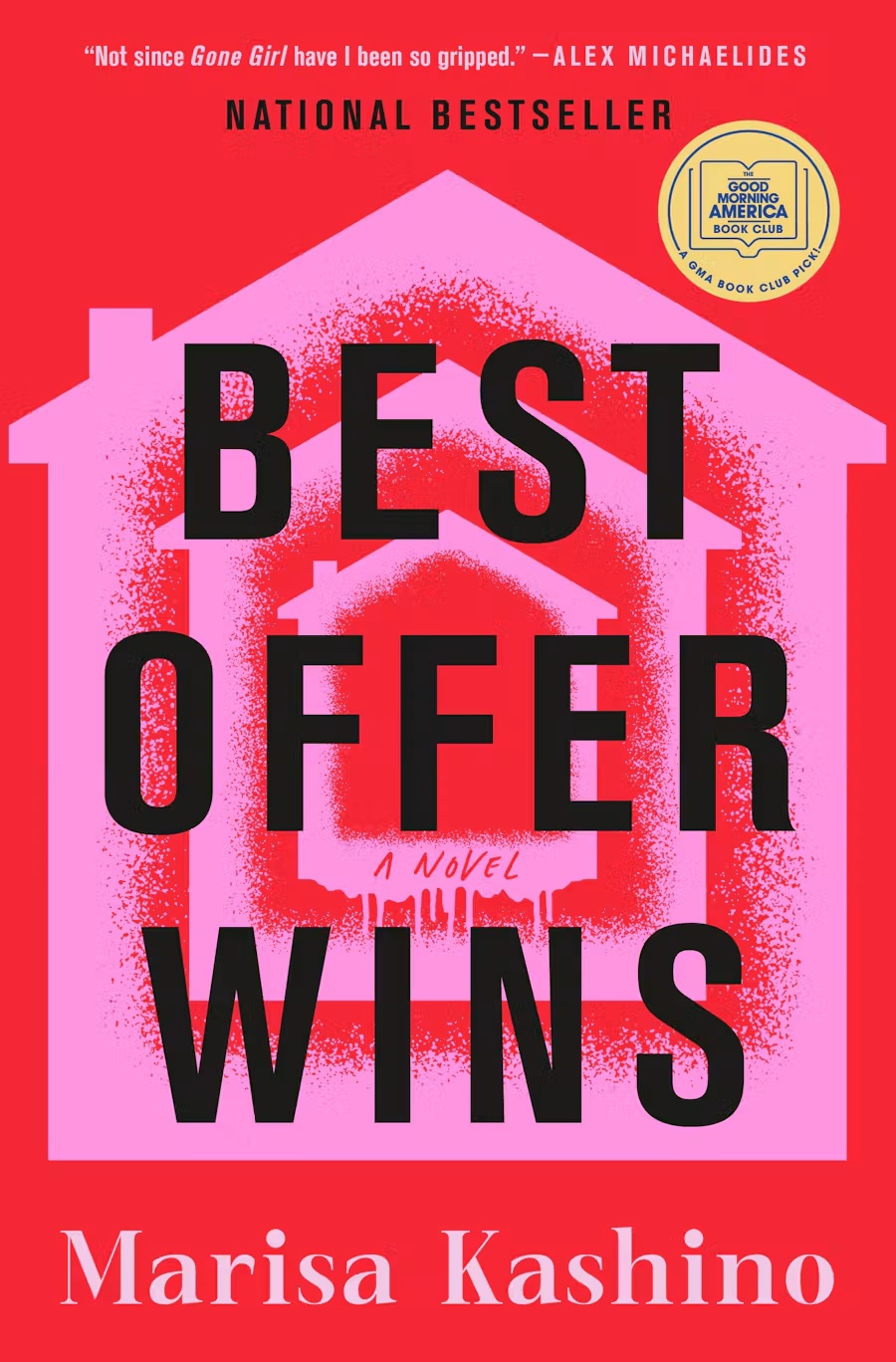
Best Offer Wins
After eighteen months and eleven failed bidding wars in the Washington, D.C., suburbs, publicist Margo Miyake hears about a desirable house in Grovemont before it is listed.
About
Spoiler notice: Spoilers for the premise and opening setup, including Margo and Ian's extended house hunt, their family plans, the unlisted Grovemont house and Margo entering private property. Later developments and the ending are not summarized.
Best Offer Wins begins with a tip that sounds like the answer to a long, punishing search. Ginny, real-estate agent to Margo Miyake and her husband Ian, says a four-bedroom house in Grovemont may be available before it reaches the market. Margo has spent eighteen months trying to buy in the Washington, D.C., suburbs, and the possibility of getting ahead of other bidders hits her as both opportunity and relief. The call arrives while she is working in public relations from the couple's cramped apartment, where each reminder of their temporary life has become difficult to ignore. The house is not yet theirs to see or buy, but Margo immediately treats the tip as a rare opening in a contest she has been losing again and again.
The opening pages show how the search has become part of the couple's daily life. Margo and Ian sold their row house after nearly a decade to help fund a larger suburban home. They moved into a rental, expecting the interruption to be brief. Instead, one desirable listing after another draws a crowd. Margo recalls an early Colonial that received twenty-two offers and sold above their bid, then describes later losses to buyers offering cash. The eleventh loss leaves her shaken enough to withdraw from an evening with friends and spend a weekend in bed. By the time Ginny calls, the couple has been waiting months without a suitable house appearing.
For Margo, the stakes of buying a home have gathered around much more than square footage. She and Ian planned to have a child, and she has begun to connect that future to finding a place where they can settle. After several failed bids, she freezes her eggs while a doctor advises that stress may be affecting their attempts to conceive. Her thoughts compress the uncertainty into a stark equation: no house, no baby. Ian, a government lawyer, is more cautious about escalating their offers and does not feel the same urgency. The tension between them grows from this difference in temperament, but also from the way Margo sees the search as the condition for restoring the life they expected to have. A home promises stability; it also becomes a measure of whether their plans are succeeding.
The novel places that longing within the economics and social language of the Washington area. Margo is frank about buying a fixer-upper in a neighborhood she calls 'transitioning' and later selling it for more than twice what they paid. She knows restaurants and grocery stores helped change the area's value, and describes herself as a gentrifier. That awareness does not stop her wanting a larger house in a wealthier suburb, with room for a child and signs of established comfort. In the publisher's reading guide, Kashino describes the book as a story about class and wanting more, with a protagonist who has advantages but remains unsatisfied. The satire keeps Margo's ambition and insecurity in view together.
When Margo and Ian drive to Grovemont, the contrast with their apartment in the city sharpens her picture of the life she wants. She imagines cooler streets beneath mature trees, excellent public schools and a house that resembles her in-laws' home. The specific property is a white-brick Colonial with a black front door, brass lanterns and a broad, carefully maintained yard. Looking through the back of the house, she notices the kitchen counters, oak floors, breakfast nook and dining room, mentally furnishing them with family meals and celebrations. These details matter because Margo does not see the house as a collection of rooms. She reads each feature as evidence that a future with a child, holidays and an orderly domestic routine could finally be within reach.
That ideal quickly collides with the boundaries of other people's property. Ian tells Margo not to enter the backyard, but she slips through the gate anyway, telling herself that she will only take a quick look. When she spots the tire swing, it feels like confirmation of the family future she has already imagined. She then moves toward the deck and peers inside, absorbed in the kitchen and the life she believes it could hold. A man arrives at the house while she is there, forcing her to retreat. The excerpt also recalls an earlier incident in which Margo entered a different house through an open garage while scouting for signs of a move. These episodes establish that her conduct is crossing from hopeful house hunting into trespass, while her internal logic keeps recasting each step as necessary.
The novel's suspense grows from the gap between how Margo explains her actions and what they mean for the people around her. She considers herself practical and alert to opportunity; Ian sees risks she dismisses. Her narration makes the market's pressures legible while showing how readily she uses them to excuse behavior that would otherwise be indefensible. The publisher calls the book a darkly comic thriller about class, ambition and the housing crisis; the official guide raises questions about privilege, race, status and what a house symbolizes beyond shelter. These questions emerge through Margo's choices. The desire for a home is recognisable, but her means make the pursuit unsettling.
Best Offer Wins is Marisa Kashino's debut novel. In the guide's interview, Kashino says she spent years reporting on Washington-area housing, including the intense competition of the pandemic period. That background informs a story of bidding wars, scarce listings and the sense that one home can decide a family's future. An off-market opportunity narrows Margo's attention further, testing her marriage and ideas about fairness. The central tension is what happens when the dream of owning a home becomes a justification for crossing other people's boundaries.
Book details
- Author
- Marisa Kashino
- First published
- 2025
- Series
- No series listed
- Subgenre
- Psychological thriller, Domestic suspense
- Primary genre
- Mystery & Thriller
- Tags
- No tags for this book.
Review
Editor profile
Baby Bat
Goodreads and social links will be added soon.
- Goodreads — link coming soon
- Social media — link coming soon