
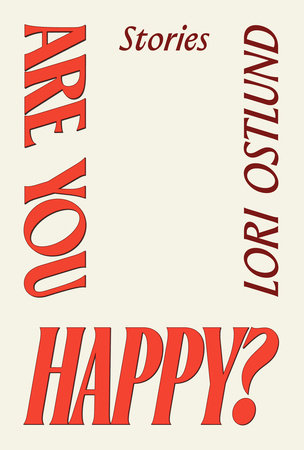
Are You Happy?
Nine stories follow people in Minnesota, New Mexico and California as they navigate family histories, intimate relationships, grief and questions of belonging.
About
Spoiler notice: Spoilers for the situations and family histories in several stories, including the premise of the final novella; individual endings are not disclosed.
Lori Ostlund’s Are You Happy? is a collection of nine stories about people trying to make sense of the lives they have built and the histories they carry. Its settings range from small-town Minnesota to New Mexico and California; its characters include couples, teachers, friends, family members and people negotiating the uneasy distance between where they began and where they are now. The stories stand on their own, with no recurring protagonist or continuous plot. Instead, the book returns to questions of belonging, intimacy, loss and safety through different situations. Everyday places—a classroom, a family home, a bar or a furniture store—can become sites where old assumptions surface and the present becomes harder to navigate. Some pieces look back over years, while others concentrate on a threat or disruption in the present. Together they give the collection several points of entry rather than one central storyline.
The opening story, “The Bus Driver,” follows Clare, a college student who returns to her hometown and encounters Jane, her childhood best friend. That meeting brings earlier memories into the present, including the girls’ adolescence and an experience that changed Jane’s life. The narrative moves across different periods rather than treating their reunion as an isolated weekend. As Clare revisits what she knew then, the story considers how adults reinterpret events they only partly understood as children. Their friendship gives the story a personal centre, while the years between childhood and adulthood shape what each woman can now recognize about the past. The reader sees Clare at different ages, so her recollections are set against the perspective she has gained since leaving home. The story’s return to an old friendship also introduces the book’s interest in how the past can feel unfinished.
In “Are You Happy?,” the title story, Phil is an aspiring veterinarian who survives a plane crash and begins again in California. Later, he returns to visit his dying mother. The visit brings him back to the earlier disaster and to his relationship with Kelvin, his partner. The story places a question about happiness beside memories of sudden loss, without turning the characters’ lives into a simple lesson about recovery. Phil’s work, family history and intimate relationships form different parts of the life he has made after the crash. Their overlap gives the title question a specific context: the past can remain present even when a person has found a new place and a new routine. Phil’s return also makes family intimacy feel complicated by what he has and has not shared with his mother. Rather than treating survival as a complete resolution, the story keeps attention on the life and relationships that follow it.
Other stories approach danger through ordinary encounters. “The Stalker” centres on a queer teacher whose sense of security at work is shaken by a student behaving inappropriately and threateningly. The classroom, usually a place of routine and authority, becomes difficult to separate from the risks she feels beyond it. “The Peeping Toms” turns to a lesbian couple after one partner discovers that a man has watched her shower. The stories differ in their situations, but both place women’s safety inside relationships and daily choices: whether to report what happened, how to respond to the person responsible, and what it means to feel protected. Ostlund gives these incidents room to unsettle the characters’ otherwise familiar lives. A partner’s reaction matters alongside the outside threat, making safety a practical question negotiated between people. In these pieces, danger does not arrive as a distant spectacle; it enters through familiar settings and changes how ordinary routines feel.
In “The Gap Year,” Beth and Matthew confront the loss of their son and the unanswered questions that follow it, alongside older losses in their history together. Their story looks at how a couple can remain connected while carrying different memories and uncertainties. The collection’s final piece, “Just Another Family,” is a novella about Sybil returning to her Midwestern family home after her father’s death. The return brings her into contact with the family and upbringing she left behind as she considers the life she has made elsewhere. These two longer family stories widen the book’s attention to grief: loss affects not only what people remember, but also how they understand the relationships that continue around them. In Sybil’s case, the return places her adult identity beside the home and family that shaped her. The novella gives this family encounter more space than the shorter pieces, but remains one distinct story among the collection’s varied lives.
Across the collection, characters are often capable in one part of life and unsettled in another. They may have work, partners or a home of their own, yet still feel out of place with family, neighbors or their earlier selves. The stories use shifts in time and perspective to place present relationships beside formative experiences, allowing the past to complicate what characters think they know. Humor appears alongside painful material, including bereavement, threat and family strain. That combination does not erase the seriousness of what happens; it shows how people can notice absurdity while living through uncertainty. The result is a set of separate portraits linked by attention to loneliness, desire, identity and the fragile ways people seek connection and security. Place matters too: moves between a hometown, a new state and a family house make belonging feel shaped by both geography and memory. The stories leave room for contradiction, letting affection coexist with resentment and practical competence with fear.
Book details
- Author
- Lori Ostlund
- First published
- 2025
- Series
- No series listed
- Subgenre
- Literary fiction
- Primary genre
- Literary Fiction
- Tags
- No tags for this book.
Review
Editor profile
Baby Bat
Goodreads and social links will be added soon.
- Goodreads — link coming soon
- Social media — link coming soon