
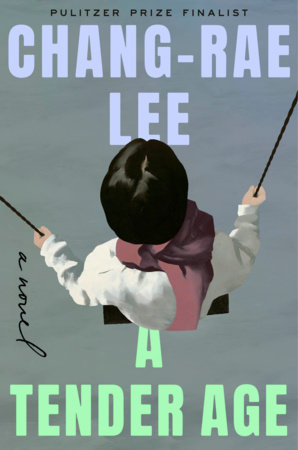
A Tender Age
Eleven-year-old Jeon-Gi, the Korean American son of working-class immigrants, moves between a close family life and the shifting loyalties of his Cove Gardens neighborhood.
About
Spoiler notice: Spoilers cover Jeon-Gi’s neighborhood conflict, the knife incident and juvenile-justice consequences, and his move to Charminster. The novel’s later life and ending are not disclosed.
A Tender Age is told by Jeon-Gi, a Korean American man looking back on a consequential stretch of his childhood. The story takes place around the time he turns eleven, when a protected family life meets the rougher lessons of the neighborhood beyond it. As a boy, Jeon-Gi moves between home, school, the children of Cove Gardens, and the adults who try to interpret what is happening to him. As an adult, he revisits those events knowing they did not end when the summer did. His account follows the tension between the child who experienced the events and the older narrator trying to understand what they meant.
At home, Jeon-Gi is the cherished son of working-class immigrant parents. His mother’s attention makes the family a place of comfort, while his younger sister Ella is part of the household life he will later remember. His parents want safety and opportunity for their children, but they cannot control every pressure their son meets outside. Jeon-Gi is old enough to want independence and recognition, yet still young enough to rely on his parents and to read adult responses as judgments about who he is becoming. Affection does not prevent misunderstanding, and good intentions do not guarantee that a child will feel understood.
Beyond the apartment, Jeon-Gi belongs to a loose group of neighborhood children who make their own world out of a neglected baseball field, a parking lot and a playground. Friendship offers companionship and a sense of place, but also comes with rules about status, courage and the ability to withstand humiliation. He watches how other boys behave and measures himself against them, even when he is unsure what those performances are meant to prove. The community around Cove Gardens includes children from different backgrounds, and Jeon-Gi is conscious of how he is seen as a Korean American boy among them. Belonging can feel necessary and precarious at once; the same group that gives a child company can expose him to conflict he cannot yet manage.
A neighborhood conflict sharpens those pressures. Publishers Weekly reports that a neighbor threatens Jeon-Gi with a ninja star, after which he starts carrying a knife for protection. In the ensuing conflict with another child, the knife becomes part of an act that brings the school and juvenile justice system into his life. The incident marks a turn from the image of an exemplary student toward the label of a troubled boy. The adults who respond must decide how to understand his actions, while Jeon-Gi faces consequences beyond the moment he thought he was defending himself. The story leaves room for responsibility and context to coexist: fear helps explain the choices around him, but it does not erase what those choices do.
After this crisis, adults attempt to direct Jeon-Gi toward a safer path. His parents and people around their Korean church hope that he will benefit from being among children with a similar cultural background. That plan leads him away from Cove Gardens and into a Christian summer camp in upstate New York. Charminster gives him new peers and a different social landscape, but changing the setting does not remove the need to work out where he fits. The camp’s promise of community carries its own expectations, and the other children become new points of comparison for a boy preoccupied with how he appears to others.
The move to camp also shifts the novel’s scale. Jeon-Gi’s experience is rooted in his family and a particular community, yet his uncertainty touches broader questions about growing up between cultures, being judged by adults, and learning which versions of masculinity win approval among boys. The reader’s guide highlights the contrasts between Cove Gardens and Charminster, and between his parents’ hopes for cultural affinity and his own experience among peers. These are not simple alternatives. Familiarity can offer recognition, while shared background alone cannot decide whether a child feels safe or accepted. Social belonging is shaped by the people present and by the roles a child believes he must perform.
The novel is framed by an adult Jeon-Gi’s recollection, so childhood is presented through both immediate vulnerability and later reflection. An episode can remain vivid long after the adults around a child have moved on, but looking back does not necessarily make every motive clear. The narrator revisits the people he loved, moments of fear and shame, and decisions whose consequences stayed with him. His account attends to culpability without turning the past into a neat lesson, asking how much a young person can understand while acting and what an older self can honestly claim to know afterward.
A Tender Age follows a boy through family affection, neighborhood loyalties, a crisis and a summer among new peers, while its adult narrator considers the lasting imprint of those experiences. Jeon-Gi’s story is shaped by ordinary places of childhood and the pressure to become someone others will accept. The distance between what he felt then and what he can say now gives the novel its retrospective focus. Rather than treating adolescence as a clean passage from innocence to maturity, the story keeps attention on uncertain choices and relationships that can continue to matter well into adult life.
Book details
- Author
- Chang-rae Lee
- First published
- 2026
- Series
- No series listed
- Subgenre
- Coming-of-age, Literary fiction
- Primary genre
- Literary Fiction
- Tags
- No tags for this book.
Review
Editor profile
Baby Bat
Goodreads and social links will be added soon.
- Goodreads — link coming soon
- Social media — link coming soon