
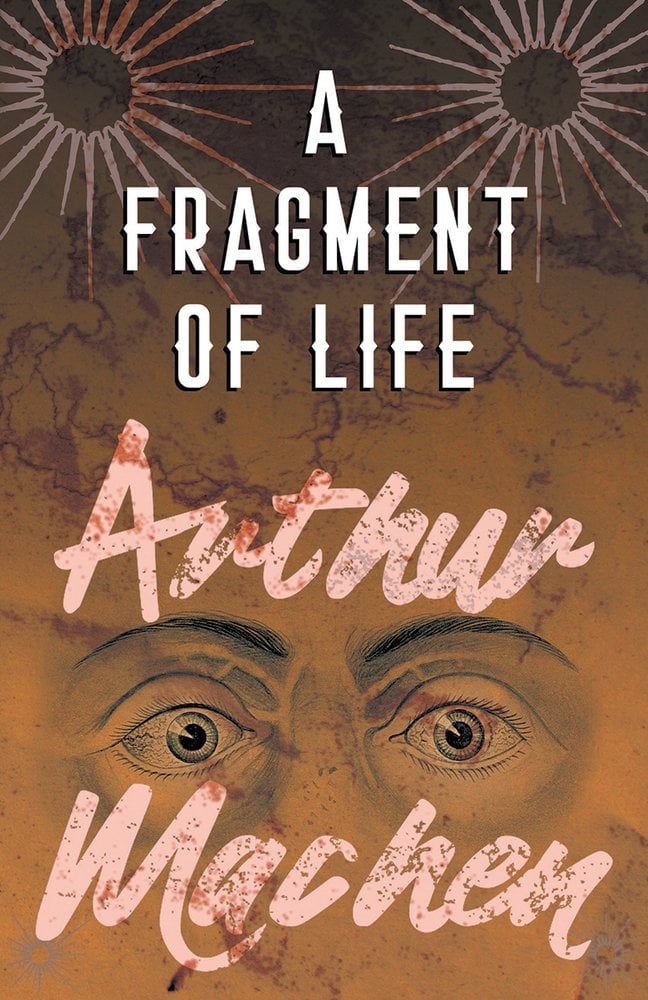
A Fragment of Life
Edward Darnell lives with his wife Mary in a London suburb, working in the City and carefully weighing household expenses.
About
Spoiler notice: This overview discusses Aunt Marian’s proposed household arrangement, the sacred well, Edward’s childhood memory and the story’s closing account of transformation.
Edward Darnell wakes from a dream of an ancient wood and a clear well into the familiar demands of suburban married life. He must dress, eat breakfast and catch the bus to his work in the City. A Fragment of Life establishes both worlds at once: the woodland remains vivid in his imagination while new furniture, household arrangements and the clock insist upon what he normally calls reality. His wife Mary appears within the same contrast, at once a practical companion and someone whose presence recalls the beauty of the dream. Their marriage is affectionate, yet the daily life around it has left little room for speaking about experiences that do not serve an obvious useful purpose.
A gift from Aunt Marian gives the couple plenty of practical business to discuss. Most of the hundred pounds is invested, but deciding what to do with the remaining ten turns into a prolonged debate. Edward imagines furnishing the spare room, and the apparently modest idea acquires the weight of a significant household improvement. Prices, possessions and the wish to spend wisely occupy their attention because they cannot casually replace money once it has gone. Machen gives these calculations room to develop, making their narrowness visible without pretending that the constraints are imaginary. Edward's life has become organised around small economies, and a better-furnished room initially seems a reasonable measure of what progress should look like.
Conversations with Mary gradually make room for another account of fulfilment. Edward remembers a holiday when he could not afford to travel away, but instead wandered through London as the evening changed around him. An ordinary street, with children playing and men singing in a public house, seemed transformed by the colour of the sky. He tried to explain the experience as fancy, yet it remained unlike the mechanical routine of his working days. Mary wants him to continue rather than dismissing the story as nonsense. Her attention matters: something he has kept awkwardly private becomes shareable within their marriage. The walks acquire the excitement of exploration without requiring an expensive journey to an already famous destination.
Ordinary family troubles continue beside these recollections. Mary's account of Uncle Robert Nixon's conduct initially gives the couple material for laughter, but Aunt Marian's arrival changes Edward's response. Faced with her distress, he wonders how he could have laughed at a broken-hearted woman. The wealth and success associated with the Nixons have concealed misery rather than preventing it. When Marian proposes paying to live with them, sympathy becomes entangled with financial advantage and the possible loss of privacy. Mary points out how much easier their circumstances would become; Edward feels that admitting a permanent third person could spoil the happiness they have together. Their discussion puts a precise household price on security, while exposing what cannot be measured by increased income alone.
Edward's sense of dissatisfaction then presses beyond a passing mood. On the accustomed journey to work, familiar streets and the talk of fellow passengers seem strange to him. The life everyone accepts as sensible begins to look like activity whose purpose has been forgotten. This is not presented simply as dislike of one employer or impatience with a difficult morning. The narrative follows a change in what Edward is willing to recognise as important, drawing his earlier intimations together. His study of old family papers gives that change another language. Genealogy leads towards writings whose apparent concern with inherited land conceals a symbolic account of the soul, rather than offering only a record of property and ancestry.
One of these writings, the Terra de Iolo, describes a sacred well hidden in Wistman's Wood. Its water is not to be treated as an ordinary drink or turned into a pleasant new sensation. The warning draws a distinction between admiring enchantment from a safe distance and accepting the demands of spiritual transformation. Edward can understand the temptation to linger over beauty, because London itself has begun to seem richly altered to him. Yet the manuscript asks for something more than an improved view of familiar surroundings. Its cautions also recall a disturbing childhood visit to the west, when he heard a girl singing terribly in an unknown tongue. The adults' frightened conversation left the event unexplained, and he remembers it as a warning about dangers on the path.
The closing pages decline to provide a complete chronicle of the life Edward and Mary subsequently share. Instead, their story takes on the character of legend, and a small book of Edward's notes and poems offers indirect evidence of the change. His verse imagines the dull city transfigured, its river, parks and streets participating in something sacred. The final note returns to the wood and well of the opening, but reverses the relationship between dream and waking: suburban labour now belongs to the dream from which he has emerged. His beloved meets him in the wood. The narrative has moved from a couple carefully discussing furniture towards a shared life whose meaning cannot be adequately expressed through their earlier habits of accounting.
Book details
- Author
- Arthur Machen
- First published
- 1904
- Series
- No series listed
- Subgenre
- Weird fiction
- Primary genre
- Literary Fiction, Fantasy
- Tags
- No tags for this book.
Review
Editor profile
Baby Bat
Goodreads and social links will be added soon.
- Goodreads — link coming soon
- Social media — link coming soon